What is CAP?
CAP — Controllable Abstraction Programming — is an engineering philosophy and learning paradigm for the AI era.
As AI increasingly replaces the traditional "learn – imitate – code" pathway, CAP asks: which engineering capabilities must still be borne by humans and cannot be outsourced long-term?
The answer is control — the ability to judge system structure, intervene at critical points, adjust design, and bear responsibility for decisions. This is the stable dimension that transcends any specific technology, language, or tool.
CAP does not reject AI. It embraces a more conscious partnership: we define goals, boundaries, and responsibility; AI executes, amplifies, and implements.
CAP's Core Thesis
"Control does not reside in technical form. It exists in the ability to take responsibility for abstraction, structure, and complexity."
- Writing code ≠ controlling a system
- Low-code use ≠ lack of control
- AI fluency ≠ engineering capability
- Output volume ≠ understanding depth
CAPI: The Practice Layer
CAPI (Controllable Abstraction Programming Initiatives) translates CAP's principles into practice-oriented initiative structures designed around the transfer of control — enterable, verifiable, and transferable.
Creative Abstraction Incubation
Using interest and creativity as entry points. AI-dominant generation is permitted. The focus is on restoring the sense of "I am creating."
Local System Control & Structural Judgment
Learners assume direct control over key system components. AI shifts from "dominant generator" to "controlled tool."
System Refactoring & Abstraction Choice
Taking responsibility for the system as a whole. Deciding abstraction levels and module boundaries. Bearing long-term consequences.
Transfer, Expansion & Continuous Optimization
CAP capabilities applied to new domains. Systems evolve from "runnable" to "evolvable." No fixed endpoint.
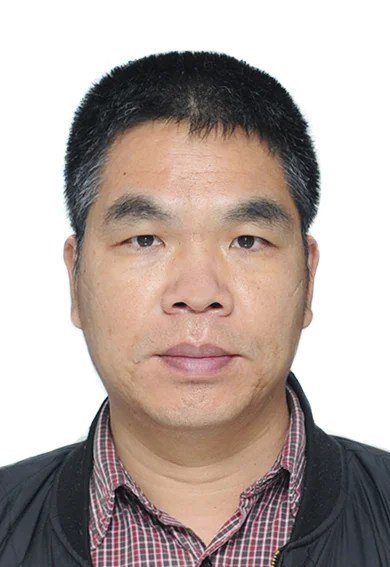
Ye Qingfeng (Phonis Ye)
Ye Qingfeng holds a Master's in Computing from the National University of Singapore and a Bachelor's in Computer Science from Shanghai Jiao Tong University. With nearly 27 years in software design, development, and system architecture, his career spans three countries and every phase of the engineering lifecycle.
Having served as a Senior Software Engineer at major enterprises and as a programming lecturer at OPAIC (Auckland International Campus), he brings deep experience in both engineering practice and education. He founded Oneness Consultancy in Auckland in 2010. Witnessing the seismic shift AI is bringing to engineering practice, he developed CAP as a response to a structural problem he observed firsthand: the traditional pathway into engineering judgment is collapsing.
CAP and its practice layer CAPI represent his conviction that the answer lies not in resisting AI, but in redefining what humans must own: judgment, structure, responsibility.
From Engineer to CAP Creator
Software Engineer — China
CS degree from Shanghai Jiao Tong University. Began career in software development.
Senior Developer & Master's at NUS
Recruited to Singapore. Insurance industry. Completed Master's in Computing at National University of Singapore.
Senior Software Engineer — Major Enterprises, Auckland
Full-stack development and system architecture at major enterprises. Discovered his calling in New Zealand.
Founded Oneness Consultancy — Auckland
Established company. Served enterprises across NZ with full-stack development and system architecture.
Sessional Lecturer — OPAIC, Auckland
Taught programming courses at Otago Polytechnic Auckland International Campus. Brought engineering practice into the classroom.
Created CAP / CAPI / EFCAP
In response to AI's transformation of engineering. Published whitepaper, initiatives, and first teaching program.
Explore the EFCAP Program
The first systematic practice model for applying CAP principles — 15 weeks of game-based engineering judgment training.
View Programs →